
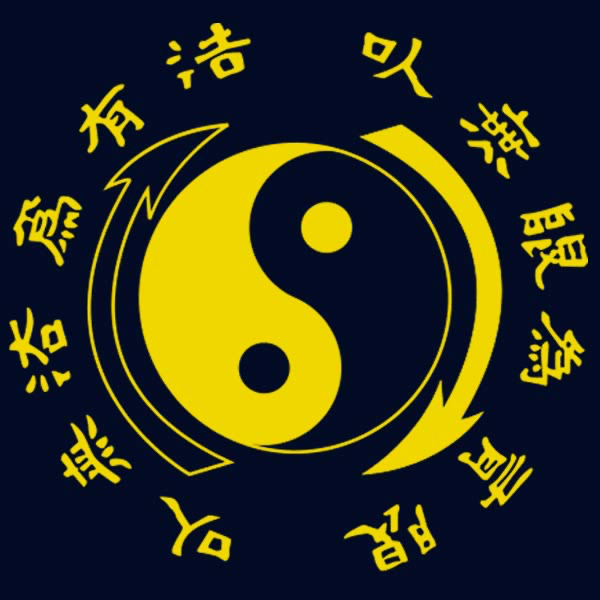
The way of the intercepting fist
Jeet Kune Do literally means “the way of the intercepting fist”. It is the fighting method devised and practised by Bruce Lee (Lee Jun Fan), who between 1967 and 1973 gathered, tested and catalogued training methods, attitudes, techniques and concepts into a complete system. It is not a style to imitate but a way of studying combat: simple, direct, non-classical.
Origins
As a boy Bruce Lee studied Tai Chi Chuan with his father and, in Hong Kong, took up the Wing Chun of master Yip Man, the style that most influenced him early on. In Hong Kong he also met Tam Tui, a kicking style, the joint locks of Chin Na and other systems of Chinese boxing. In the United States he taught his kung fu, known as “non-classical gung fu” or Jun Fan Gung Fu, and widened his research to judo, ju-jitsu, karate and aikido, Western boxing, fencing, French savate and Thai boxing.
The result moved steadily away from Wing Chun until it became unrecognisable: punches came from boxing, footwork and the intercepting attitude from fencing, locks and throws from grappling, which are an integral part of Jeet Kune Do.
Principles
- Intercept: strike the attack the moment it is born or, better still, intercept the opponent’s intention before it becomes action. This is the principle of the pre-emptive strike.
- Space, timing and rhythm: distance, timing and broken rhythm matter more than strength.
- Simplicity and economy: direct, essential movements, adaptable to any situation. Whatever is superfluous is discarded.
- Flow: move from one technique to the next without delay, and from one range to another, choosing the best strategy as the fight evolves.
- The individual at the centre: absorb what is useful, discard what is useless, add what is specifically your own. Technique adapts to the practitioner’s body and character, not the other way round.
How we train it
- The four ranges: kicking, punching, trapping and grappling, to be recognised and linked without interruption.
- The body’s tools: fists, feet, elbows and knees and how to use them best at each range.
- Trapping: hands that control the opponent’s arms to open the line for strikes (pak sao, lop sao, etc.).
- Locks and throws to end the fight once the distance has closed.
- Attributes: speed, timing, tactile sensitivity, coordination, power.
- Sparring and conditioning: Bruce Lee was among the first to adopt protective gear and equipment from other disciplines to train with real contact. In our gym sparring comes gradually, with protection and at an intensity suited to each person’s level.
A method that is still current
Because it breaks down the barriers between styles, Jeet Kune Do is regarded as a forerunner of kickboxing and of modern mixed combat. It remains current because it rests on real principles and an almost scientific method of analysis that starts from the person and their qualities.
In the Black Bull programme
Jeet Kune Do is the backbone of empty-hand work and integrates with Kali for weapons and objects and with Silat for close range and the ground, for 360-degree combat.
Who it is for
Complete beginners and practitioners with experience in other arts. No athletic background is required: fitness improves with practice.